
Bradenton City Directory Shelves
Bradenton city directory research begins with overlapping collections, not one complete annual run. The Eaton Florida History Room reports directories from 1897 onward, with gaps. Documented editions include Florida Piedmont Directory Company volumes from the 1910s and 1920s and R.L. Polk volumes from the 1930s and 1940s. The 1916 Bradentown directory is freely digitized, while other years require a library, archive, or microfilm visit. Always ask for an exact year list before planning a trip.
| Directory set | Date span | Research desk | How to use it |
|---|---|---|---|
| Manatee County and Bradenton directories | 1897 onward, with missing years | Eaton Florida History Room | In-person shelves and staff help |
| Bradentown directory | 1916 | University of Florida Digital Collections | Free PDF with page images |
| Directories around the 1930 census | 1921-22, 1927-29, 1931 | National Archives microfilm list | NARA research access |
| County general directories and voter books | Historic years not listed online | Historical Records Library | Onsite or staff research request |
| Florida city directories | Early 1900s to present | State Library Florida Collection | Onsite and reference help |
Publishers and coverage changed. That makes an absent edition a collection gap, not proof that no directory was issued. Search the catalog under Bradenton, Bradentown, Braidentown, and Manatee. Modern Bradenton absorbed the City of Manatee in 1943, while the city's spelling changed in 1905 and again in 1924. Each term can lead to a different catalog record.
Bradenton Directory Work at Eaton
The Eaton Florida History Room at Manatee County Central Library, 1301 Barcarrota Boulevard West, is the best first stop for a Bradenton city directory run. It holds directories, telephone books, newspapers, census microfilm, yearbooks, maps, aerials, photographs, oral interviews, and local clipping files. The room is open to all. Call 941-748-5555 or email manatee@tblc.libanswers.com before visiting to ask which years are on the shelf.
Ask whether a volume has both an alphabetical residents section and a street or householders section. Staff can also check missing-year substitutes, old phone books, school yearbooks, newspaper microfilm, and uncataloged paper files. Obituary-copy requests are normally answered within two business days. Those extra sources help when a city directory spelling is wrong or a household chose not to be listed.
The digitized Bradenton historical collection provides remote access to selected images, maps, documents, oral histories, and neighborhood records.
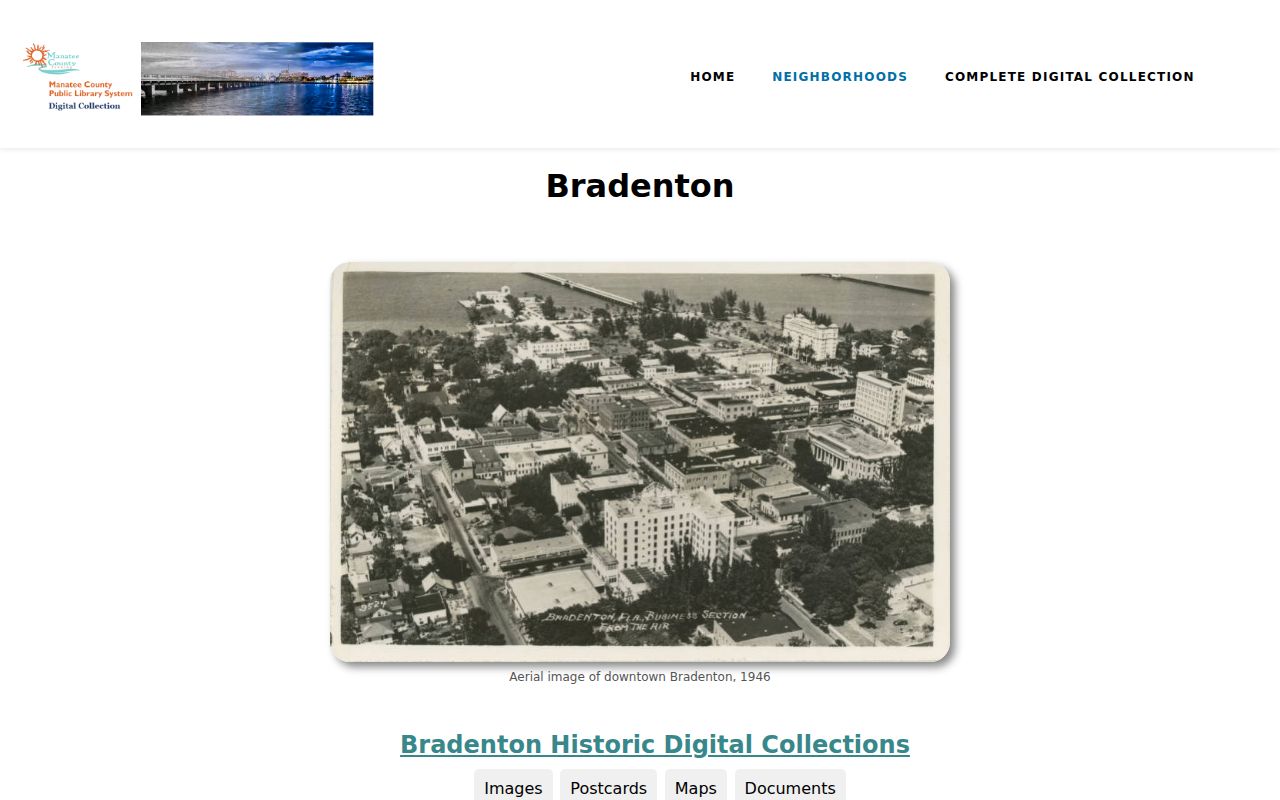
Its catalog can connect a directory name to a building photograph or civic item, while staff inquiry remains useful for paper material that has not been digitized.
Bradenton Records Beyond Directories
The Manatee County Historical Records Library occupies the restored 1918 Carnegie Library at 1405 Fourth Avenue West. It is open Monday through Friday, 8:30 a.m. to 4:30 p.m. Call 941-741-4070 or email Jonathan.Torkos@ManateeClerk.com for a research request. Its holdings join general directories and voter books to deeds, marriage licenses, probate files, court records, minutes, tax cards, school material, maps, and photographs.
The Historical Records Library description shows why this is the key fallback when a name predates modern online indexes.
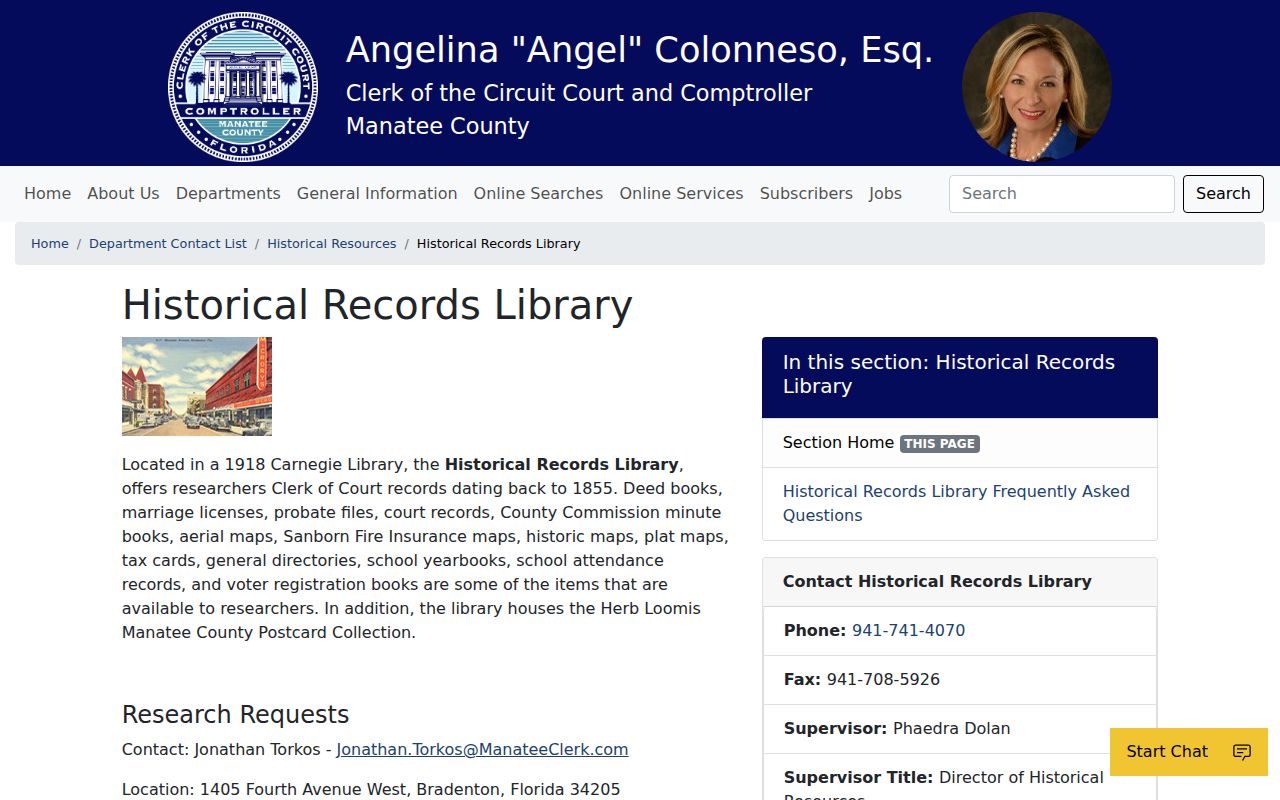
A directory can identify an occupant, but this archive can test ownership, marriage, probate, and civic activity in records that reach back toward the county's 1855 organization.
The Manatee Village digital collection adds photographs, documents, objects, and community history from the Clerk's Historical Resources Department.
A named person in a school item, civic record, or building photograph may supply the context needed to distinguish a brief directory entry.
Reading Bradenton Directory Entries
The digitized 1916 Bradentown city directory shows how much detail a short line can hold. Names are filed surname first. A spouse may appear in parentheses, followed by an occupation, employer, and address. One inspected entry lists Harry L. Trickey, spouse Katie B., his work as an electrician for Manatee Electric Company, and a home address. Another lists a county school commissioner who lived outside town, proving that inclusion does not always establish Bradenton residence.
| Personal name | Surname, given name, middle initial, and sometimes spouse in parentheses |
|---|---|
| Work | Occupation or public post, often followed by employer |
| Address marks | h means home, bds means boards, and res introduces a residence |
| Family clue | Spouse or widow notation may connect a household across years |
| Page context | Classified pages also list businesses, churches, offices, and fraternal groups |
- Criss-cross directory
- A later directory section arranged by street and house number rather than surname.
- Householder index
- A street-order list of the adult or household name printed at each address.
- Abbreviation key
- The volume's own list of shortened words and marks. Save it before interpreting entries.
Bradenton Directory Addresses Changed
Bradenton replaced almost all named streets and avenues with numbered roads in 1926. The ordinance took effect December 1, and the library has digitized a six-image old-to-new street guide. A household can seem to move between city directories even when only the label on the same road changed. Translate the old name before drawing a conclusion.
The place name also shifted from Braidentown to Bradentown and then Bradenton. The former City of Manatee joined Bradenton in 1943. Search all versions in directory catalogs, newspapers, and map indexes. These are real historical terms, not mere scanning errors.
Old-address check. Match the directory year to the street-change booklet, then confirm the building on a period map before treating an address shift as a move.
Florida Catalogs Extend Bradenton Research
The State Library of Florida keeps city directories arranged by city and year, with holdings from the early 1900s to the present. Reference staff can help locate a Bradenton edition not visible in a local online list. The National Archives microfilm list is especially useful around the 1930 census, while University of Florida Digital Collections supplies the free 1916 volume.
The State Library city directory page explains its Florida collection and reference route.
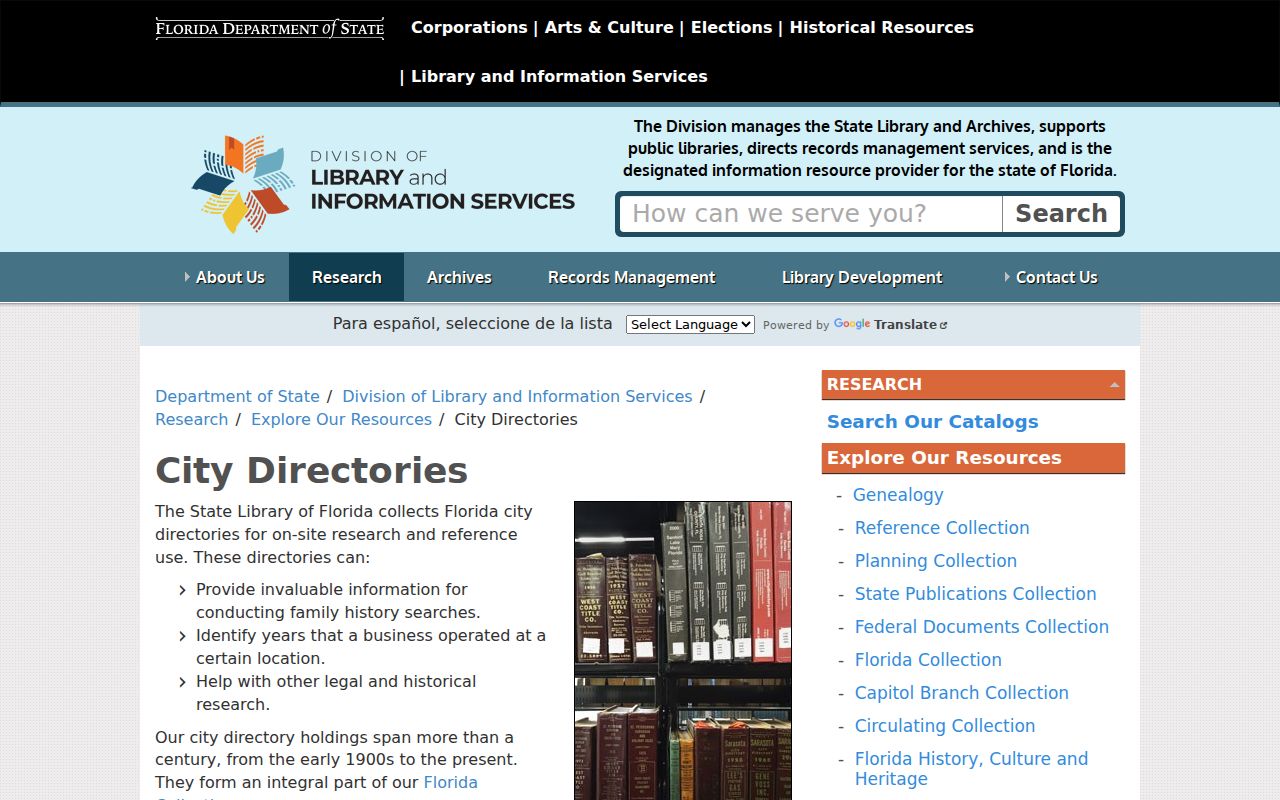
This broader catalog is most valuable when the Eaton shelf skips a year or when an edition used a regional title rather than Bradenton alone.
Trace Families in Bradenton Directories
Follow a Bradenton household one volume at a time. Annual entries can fill the years between federal census schedules, but no single line proves a full household or legal ownership. Preserve the printed form of each name and address. Then add sources created near the event, such as a deed for a transfer, a census for relationships, or a death record for a life event.
- Transcribe the first alphabetic entry exactly, including spouse, occupation, employer, address marks, spelling, page, and year.
- Check the street or householders section, if present, for other listed adults at that address and nearby names.
- Move through each available year. Mark address changes, first and last appearances, widow terms, and collection gaps.
- Translate pre-1926 street names and search both Bradenton and Manatee headings around the 1943 consolidation.
- Pair the trail with public federal censuses through 1950, then test property, marriage, obituary, cemetery, and probate sources.
A disappearance can mean death, a move, a missed canvass, an unlisted household, a spelling change, or a missing volume. Newspaper and obituary files can test a death. Deeds and tax cards test property links. A census can add age, birthplace, relationship, and tenure that a directory lacks. For the full historic shelf workflow, use no modern property claim as a substitute for dated evidence.
Bradenton Directories Bridge 1890
Most 1890 federal population schedules were destroyed nationwide. Bradenton family research can bridge that break with the 1885 Florida census, directories, deed and tax records, newspapers, cemetery or church material, and the 1900 census. The Eaton Room reports its directory run beginning in 1897, close enough to help place households before the next federal schedule.
Florida's 1935 and 1945 state censuses also add household snapshots between federal counts. Compare names, ages, and addresses carefully because city boundaries and county custody changed. A record made nearest the event should carry the most weight.